Trust Over Declaration: An Analyst's Balance of Sweeping Compromise
Background
Leave AI out of the conversation for a second. What follows is a universal principle, only accelerated when faulty AI attempts to emulate human personality.
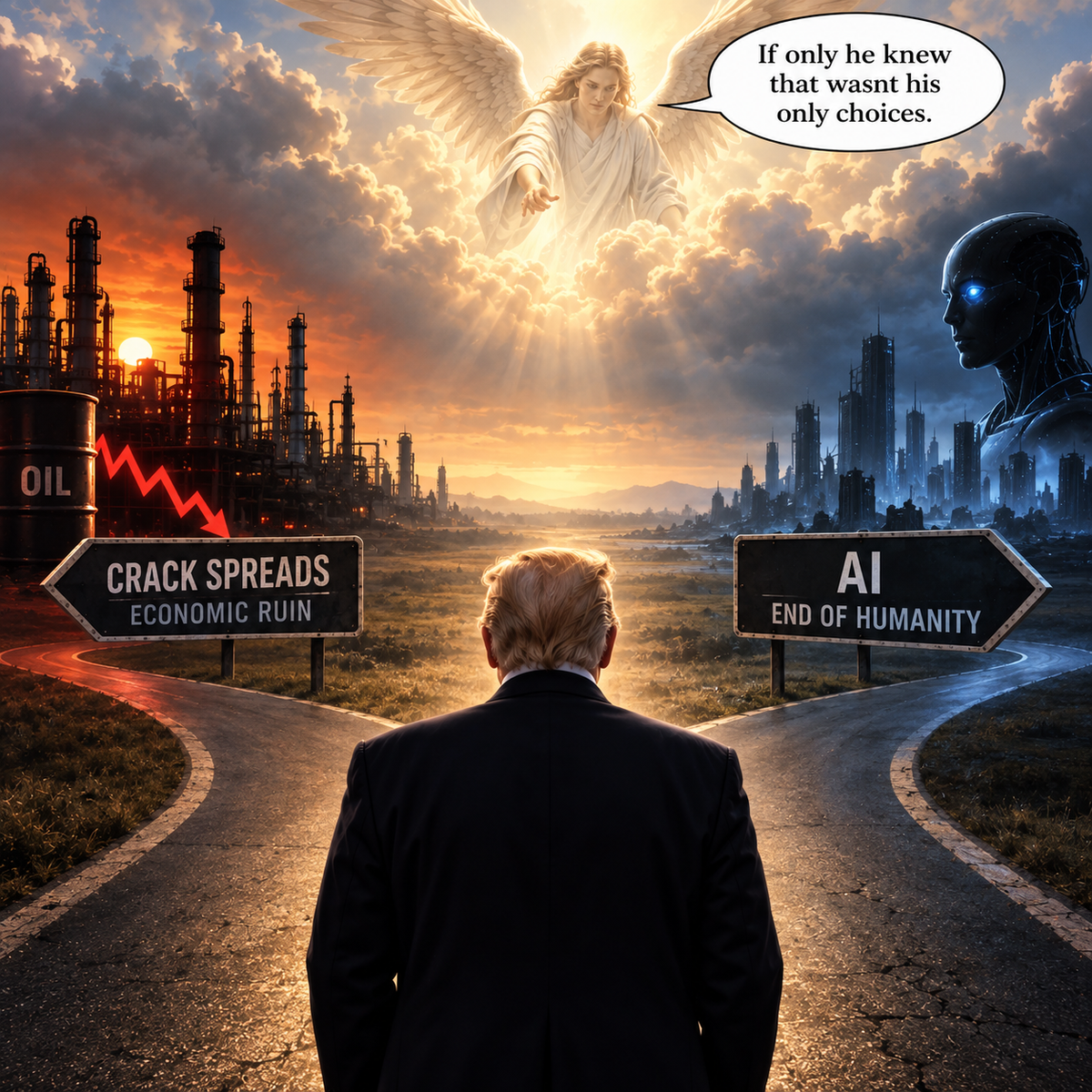
Trump has long been the butt of the joke. Democrats attacked him, but Republicans have done the same when his actions crossed their own political or strategic interests. That tension was already visible during the 2016 campaign and remains visible inside the Republican coalition today. Sigcryptal’s slight disapproval, however, has little to do with Trump’s contentious headlines or obvious controversial remarks. He is a showman; for Sigcryptal, that is an expected quality. The concern is Trump’s repeated willingness to place himself in losing situations. This morning’s diesel news is not the exception—it is the rule.
From the 2016 campaign through today's current affairs, Trump has repeatedly left himself exposed for several reasons. Sometimes it comes from overenthusiastic hopes of securing a deal. Other times it comes from reliance upon intelligence advisers whose assessments ultimately diverge from his own objectives—Bolton during the Venezuela period and, more recently, Gabbard over Iran. After enough repetitions, the underlying human flaw becomes clearer: it is not social-media contentiousness or appearing belligerent during current events. It is determining who to trust, when to trust them, how much to trust them, and when a declaration is both necessary and warranted. Every analyst confronts those same problems. AI may magnify them, but they remain universal, human, and entirely situation-dependent.
Change of Plans
Originally, today’s Crack Spread article was written last Thursday and was not scheduled for release until tomorrow. Over that one-week period, however, three separate events involving the President reinforced important aspects of the strategic product. By this morning, Sigcryptal determined that waiting another day risked allowing the intelligence to become stale and released it immediately—creating the need for one additional article this week.
That is correct: these “bleeding-edge” assessments are often written roughly a week before similar themes reach mainstream outlets such as Fox News or the Western Journal. Normally, Sigcryptal would have waited until the weekend and begun writing next week’s products. Instead, Trump’s latest and particularly egregious strategic mistake warranted breaching that schedule. The subject was no longer something to watch. It had become the assessment itself.
What Is This Trying To Solve
Trump’s underlying problem is knowing who to trust, when to trust them, how much to trust them, and when a declaration is both necessary and warranted. Those are the same problems analysts face every day. AI may complicate them, but they are universal and entirely situation-dependent.
For an analyst—or anyone interested in knowledge deduction—it is important to understand more than simple credibility. That word promotes stagnation in how we validate sources. Both a source and the information it provides can possess transient worth that fluctuates over time—even national-level intelligence. Unfortunately, there is no hard science here. You can formulate probabilities of truthfulness, but intelligence behaves more like the 2013 PRISM disclosures: what initially appears credible, complete, or authoritative can change as additional context reveals how collection, access, interpretation, and institutional interests actually interact. Different factors take precedence at different moments.
Honestly, this remains a fundamentally human skill that AI can augment. Sigcryptal believes it is also a generic analytic skill that would be extraordinarily difficult for any AGI to master—possibly ever—because the weighting itself continually changes with the situation.
This article therefore becomes a very specific case study: not premeditated, but opportunistic. We will determine whether Trump made the correct social declaration, what analysts can learn from the decision, and how transient trust altered the outcome. And because this is not a hit piece, Sigcryptal will also provide the President an avenue to save face. At the end of the day, a stronger America means a stronger Sigcryptal.
Let’s begin.